Things You Should Know You Tube
Information technology is a trope that is far more mutual than you think. Information technology has made appearances in films like Sleeper, 2001: A Infinite Odyssey, Vanilla Sky, and even in Austin Powers: International Man of Mystery, simply to proper name a few. A fatally injured/sick protagonist or character in the film puts their body "on water ice" with the hopes of eventually waking up in a future that can set their ailments. You guessed it, cryonics.
What is our fascination with cryonics? Could humans really create a technology that allows them to crook decease? For centuries, philosophers take discussed and shed low-cal on humanity's underlying anxiety surrounding their mortality.
To our knowledge, we are the but species in the creature kingdom, aware of our mortality. Dubbed Bloodshed salience , this source of feet has driven some of the most recent interesting technological projects, like Elon Musk'southward plan to upload the human listen to computers. Cryonics could also help ease our fears. All the same, nosotros are getting ahead of ourselves. What is the definition of cryonics?
For the uninitiated, cryogenics is the written report of what happens to materials at very low temperatures. Cryonics is the technique used to store human bodies at extremely low temperatures with the hope of 1 twenty-four hours reviving them. If you think that this is some distant opportunity for your future ancestors, you would be wrong. In fact, you lot tin can sign up to be cryogenically preserved now after y'all laissez passer abroad for a hefty fee. Nonetheless, what does science say about cryonics, and is it something that we should be excited well-nigh? Permit's take a wait.
1. Information technology all started with the Iceman, Robert Ettinger
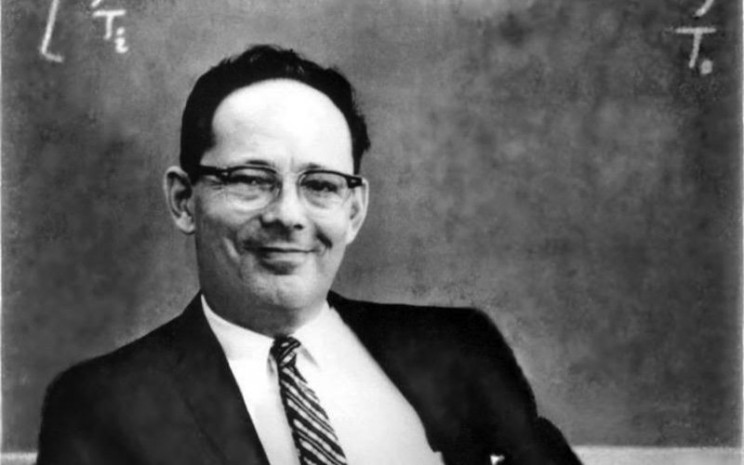
The thought of cryonics took root in 1962, when the physics teacher and science fiction writer Robert C. Westward. Ettinger, suggested in his popular book, The Prospect of Immortality, that humans could freeze themselves, preserving each other, then that a more advanced medicine could revive them. For the majority of his life, Ettinger was obsessed with his ain mortality. In a way, he was always looking for immortality.
Born in the United States in 1918, to a Ukrainian female parent and German father, young Ettinger spent much of his babyhood in Detroit. In that location he vicious in dear with science fiction magazines that seemed to predict the future, describing technologies similar rockets, tv, computers, cell phones. The writer grew fascinated with immorality in 1931, while at the age of twelve, The Jameson Satellite. The story follows a dying professor who has himself launched into the cold storage of space, eventually having an alien race transport his frozen brain into a new mechanical trunk so that he can alive forever.
"I grew up with the expectation that ane solar day we would learn how to reverse aging," said Ettinger in an Interview with the New Yorker. His brush with death as a soldier in World State of war II would reinforce his obsession with immortality. Upon releasing his book in 1962, the thought of cryonics really took off. And, by the 1970s, at that place were six cryonics companies beyond the U.s.a.. Robert Ettinger passed abroad in 2011 at the age of 92. Of course, he was cryogenically frozen, and his legacy has made him immortal.
2. What exactly is cryonics?

Still not certain about cryonics? Let's intermission it downwards. As mentioned in a higher place, cryonics is the procedure of preserving human bodies in freezing temperatures with the eventual aim of having them revived when engineering "catches up." Basically, cryonics is betting on the fact that engineering science advances to such a bespeak that we tin bring people back who have "died." Perhaps a person dies of an incurable disease. That person will exist cryogenically frozen, which is also known every bit being cryonically suspended when the cure for the affliction has been discovered.
The idea of cryonics is non too out of pocket. At that place are reported stories inside the medical community of people falling into an icy lake for hours and brought to the brink of expiry only to be resuscitated and "brought dorsum to life." How? The frigid temperature in the lake puts their body in a land of almost suspended animation, causing their brain office and metabolism to tedious downwards to the point at which no oxygen is needed.
Stories similar these drive the cryonics community. Once more, the idea is that if you can preserve the listen, y'all can maintain the mind of a person. You save the person as the body tin be fixed in the future. Still, the process of cryonically suspending is much more complicated than dropping someone in cold water. Yet, the process of freezing your body is dependent on preserving that information in your encephalon.
three. Cryogenically freezing someone alive is currently illegal
Information technology is currently illegal to cryogenically freeze anyone that is alive. So exercise not expect to see information technology appear on any long trips to space just withal. People who desire to exist put in "cryosleep" need to be legally dead. However, it is non what yous think. Legally dead is not the aforementioned as "totally dead." When a person is legally expressionless, their centre stops while totally dead is when a person's brain function completely stops. Even when the heart stops, some brain function remains. Preserving this encephalon data is a crucial component of the cryonics process.
4. How does the process work? At that place are three full general steps

There are organizations effectually the world that will preserve your body for a hefty fee costing up to $150,000 in total. If you would want to get cryogenically suspended, here is what you need to do. First, you lot would find a reputable facility, sign up, and begin paying your fee.
On that sad mean solar day that y'all do pass away and are legally dead, an emergency team will blitz over to collect you. They volition stabilize your body, supplying your brain with enough oxygen and blood to preserve minimal office until you can be transported to the suspension facility. Additionally, your torso is packed into ice and is injected with an anticoagulant to prevent you from getting a blood clot.
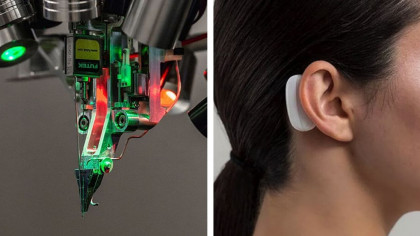
Upon arrival at the facility, the onsite medical team removes the water in your cells and replaces it with a special glycerol-based chemical mixture called a cryoprotectant. This substance prevents your body's cells from freezing and eventually shattering. Recall of it as an antifreeze for humans. The end goal? The medical team wants to prevent your body from forming whatever water ice crystals during the cryonic suspension.
Finally, once your body is deemed ready, it is cooled on a bed of dry water ice until it reaches approximately -130 C. Then it is placed in its own massive metal tank filled with liquid nitrogen at a temperature of -196 C until the day yous come back to life.
5. Cryonics is still very much in its infancy
You lot volition non have your immortal life merely still. Cryonics is a cause of a lot of criticism, something we will explore next. Fifty-fifty more and so, the procedures and steps needed to preserve a body accept yet to be perfected. On the other side of the argument, cryogenic is currently existence studied. Freezing cells and organs are viable. Researchers accept fifty-fifty frozen a rabbit's kidney for an extended period of fourth dimension, then unfroze it and placed information technology back in the rabbit with success.
However, we are far more complicated than jail cell organs. The biggest challenges are going to come when humans have to reanimate their bodies. To do this, y'all will have to cure the furnishings of being preserved, cure any killed the person, and the biggest challenge of them all, bring them back to life. Cryonics is no way to find a solution for eternal life, yet.
half dozen. There are strong opinions on cryonics in the scientific community on both sides of the table
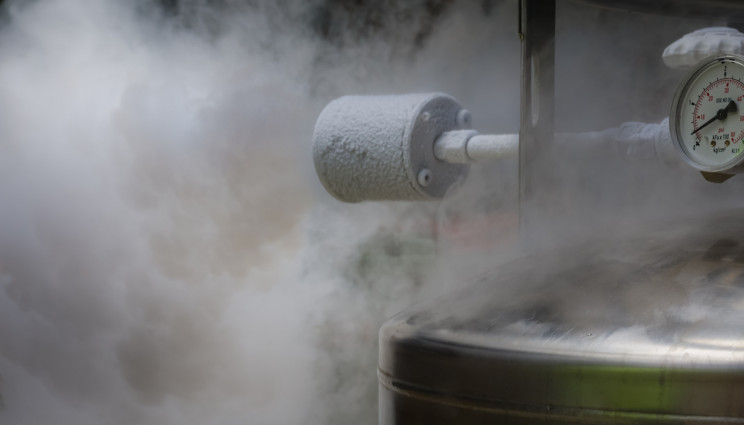
There have been vocal researchers and scientists against the cryonics motion. In the 2015 MIT Technology review commodity, The Imitation Science of Cryonics , neuroscientist Michael Hendricks shares his criticism of the promise of cryonics, stating, "No one who has experienced the disbelief of losing a loved one can aid only sympathize with someone who pays $80,000 to freeze their brain. But reanimation or simulation is an abjectly false hope that is beyond the promise of engineering and is certainly incommunicable with the frozen, dead tissue offered by the "cryonics" industry."
"Those who turn a profit from this promise deserve our anger and contempt." Many other scientists accept shared like sentiments. However, there are some who want to keep the discussion. Robert J. Shmookler Reis a professor in the Departments of Geriatrics, Biochemistry & Molecular Biology, and Pharmacology/ Toxicology at the University of Arkansas for Medical Sciences stated in an article for MIT that "Cryopreservation is already used in laboratories all over the world to maintain brute cells, human embryos, and some organized tissues for periods every bit long as three decades."
"Cryonics deserves open up-minded discussion, as do mainstream efforts to understand the nature of consciousness, preserve human being tissue and organs for life-saving transplants, and rescue critically injured patients past understanding the boundaries between biological life and death." Withal, the polarizing nature of cryonics has non stopped people from paying to be cryogenically frozen.
7. The start person to be chronically cryogenically frozen was a psychologist
Dr. James Bedford was the outset person to be cryogenically frozen, doing so at the age of 73 in 1967. The psychology professor at the Academy of California adult kidney cancer that later metastasized to his lungs. Inside an 60 minutes of his decease, members of the cryonics Society of California retrieved his body, properly preserving the body earlier taking it to their facility. The body is still in expert condition at the Alcor Life Extension Foundation.
viii. And a lot of people have already signed up to exist put on ice
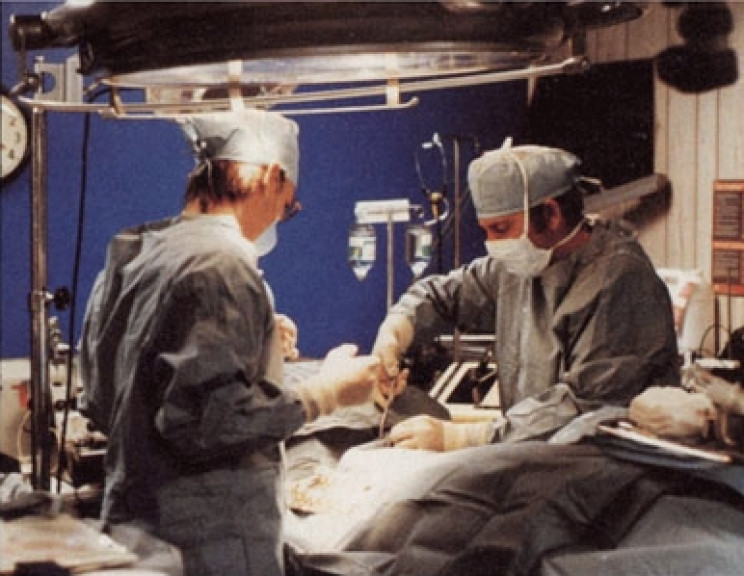
At the moment, there are an estimated 1500-3000 corpses currently frozen around the world in cryogenic facilities, while in that location are an estimated seven leading cryonic organizations across the globe. The Cryonics Found and Alcor Life Extension Foundation are considered leaders in their fields, with the later foundation having hundreds of members and dozens of patients. Yous can sign upward to go a member of their websites.
9. Nanotechnology could help brand cryonics more than feasible
Nanotechnology holds the promise of condign massively impactful technology, shaping pregnant industries, including the medical world, if it is brought into fruition. Nanotechnology could be used in cryonics and could play a role in reanimating bodies. These microscopic machines that accept the power to dispense single atoms. They could be used to care for humans, repair cells, and tissues. Nanotechnology could even exist used to contrary the effects of cryonic break.
To freeze or nor to freeze
Though cryonics has died down some in popularity, the science fiction trope is hotly debated. Emerging technologies like bogus intelligence could potentially make cryonics a more realistic option. However, we are going to have to wait and run into. Researchers believe that cryonics could run across a major revival in 2040. We will merely have to expect and see. Would y'all cryonics freeze yourself? Why or why not?
Source: https://interestingengineering.com/science-or-scam-9-things-you-should-know-before-you-sign-up-for-cryonic-suspension

Postar um comentário for "Things You Should Know You Tube"